 20Hecto
What if your phone's camera could see past the marketing claims on a box and predict exactly how your blood sugar will react before you take a single bite? In 2026, 87% of health-focused consumers actively read food labels, yet most remain trapped in the outdated cycle of calorie counting. You've likely realized that standard apps only show basic macros, leaving you to guess the actual impact on your energy levels. A modern barcode nutrition scanner for metabolic health must bridge this gap by acting as a biological translator rather than a simple digital reader.
It's frustrating to log every meal manually only to remain unsure about your glycaemic load. You deserve a tool that removes the friction from data entry while providing instant insight into glucose spikes. This article demonstrates how to leverage scanning technology to monitor metabolic markers with clinical precision. We'll explore how to correlate specific foods with your body's unique response and create a streamlined data set to share with your healthcare provider. It's time to move beyond the spreadsheet and start using data that actually moves the needle on your wellness journey.
Key Takeaways
- Identify why a biological lens is superior to traditional calorie counting for managing insulin resistance and long-term metabolic efficiency.
- Learn how to use a barcode nutrition scanner for metabolic health to instantly calculate glycaemic load and predict post-meal glucose responses.
- Master a hybrid tracking approach that utilizes barcode scanning for processed goods and AI photo logging for whole foods to ensure data accuracy.
- Discover the process of correlating scanned nutritional data with clinical lab values like HbA1c, thyroid markers, and lipid panels.
- Leverage the 20Hecto ecosystem to centralize food logging and metabolic metrics into a single, high-tech wellness dashboard.
Beyond Calorie Counting: Why You Need a Metabolic Health Barcode Scanner
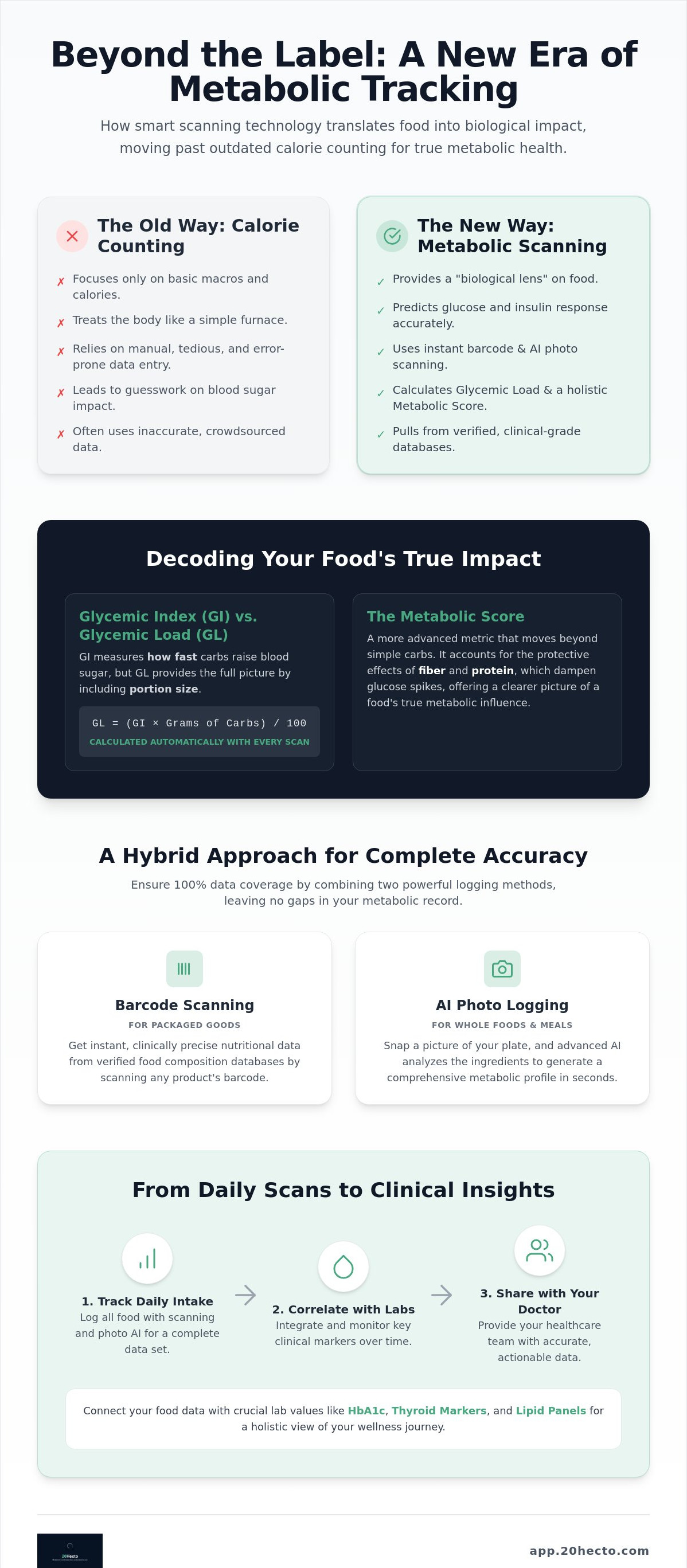
A barcode nutrition scanner for metabolic health represents a fundamental shift in how we quantify food. Traditional digital logs treat the body like a simple furnace, where every calorie burned equals a calorie consumed. This model is scientifically incomplete. A metabolic scanner interprets data through a biological lens, prioritizing how ingredients interact with your endocrine system rather than just your energy balance. For individuals managing insulin resistance or PCOS, this distinction is vital. Standard apps often ignore how hidden additives and high glycaemic ingredients trigger hormonal cascades that stall progress.
Nutritional biometry is the next frontier. It uses precise data to predict physiological responses before you eat. By scanning a barcode, you're not just looking for a number; you're identifying the specific link between processed food formulations and metabolic dysfunction. Many packaged goods contain emulsifiers or hidden sugars that disrupt the gut microbiome and insulin sensitivity. A scanner exposes these hidden variables instantly, allowing you to make informed decisions without the guesswork.
The Shift from Macros to Metabolic Impact
Consider two foods with identical macronutrient profiles. 20 grams of carbohydrates from lentils will affect your body very differently than 20 grams from white bread. The lentils contain complex fiber and plant-based proteins that dampen the glucose response, preventing the sharp insulin spike associated with refined flour. A barcode nutrition scanner for metabolic health identifies these nuances. Instead of focusing on raw calorie counts, it provides a Metabolic Score. This metric accounts for the protective effects of fiber and protein, offering a clearer picture of how a food choice influences your long-term health markers.
Why Speed and Accuracy Matter in 2026
Accuracy depends on the quality of the underlying information. Many apps rely on crowdsourced data that is often riddled with errors or incomplete entries. High-fidelity systems pull from verified food composition databases to ensure clinical precision. This matters because even small data gaps lead to significant metabolic miscalculations over time. If you can't trust the data, you can't trust the results.
Friction is the primary reason people stop tracking. Manual entry is tedious and prone to human error. It creates data gaps that make clinical oversight difficult. In 2026, technology has solved the "Product Not Found" frustration. If a barcode isn't in the database, advanced AI can analyze the label and ingredients in real-time to generate a metabolic profile. This ensures you never lose a data point, maintaining a complete record for your metabolic dashboard. Reliability and speed turn a chore into a seamless part of your daily routine. This level of efficiency is essential for those who need to share accurate logs with their healthcare providers.
Decoding the Data: Glycaemic Load and Insulin Impact
Understanding the difference between Glycaemic Index (GI) and Glycaemic Load (GL) is the first step toward true metabolic mastery. While GI measures how quickly a specific carbohydrate raises blood glucose, it fails to account for the total amount of carbohydrates in a standard serving. This is where a barcode nutrition scanner for metabolic health becomes indispensable. By analyzing the product's full nutritional profile, the scanner provides a more accurate prediction of your body's hormonal response. It moves beyond the simple "good vs. bad" food labels to provide a nuanced, data-driven perspective on metabolic impact.
A high-quality barcode nutrition scanner for metabolic health relies on verified data sources, such as the USDA's FoodData Central, to ensure the accuracy of these calculations. Without this precision, you're essentially guessing your metabolic response. Relying on general estimates often leads to unexpected glucose spikes that can derail your health goals. Accurate data allows you to identify which "healthy" snacks are actually high-GL traps in disguise.
Calculating Glycaemic Load on the Fly
Glycaemic Load is calculated using the formula: GL = (Glycaemic Index x Grams of Carbohydrates) / 100. 20Hecto automates this calculation during every scan, removing the need for manual math or mental gymnastics. This automation is critical because portion control is the most significant variable in the GL equation. Even a low-GI food can trigger a substantial insulin response if consumed in large quantities. By scanning the barcode, you receive an instant GL value based on your actual serving size, providing immediate clarity before you begin eating.
Beyond simple sugar counts, many processed foods contain additives that have an "insulinogenic" effect, meaning they trigger insulin release even without a significant glucose rise. Identifying these requires more than a casual glance at a nutrition label. Start analyzing your meals with our metabolic tracking dashboard to see the real-time impact of these variables on your unique biology.
Identifying Hidden Metabolic Disruptors
Ultra-processed foods are often engineered with synthetic emulsifiers and artificial sweeteners that can negatively impact the gut microbiome and insulin sensitivity. Barcode technology identifies these disruptors by cross-referencing ingredient lists against known metabolic red flags. Common culprits include:
- Synthetic Emulsifiers: Polysorbate 80 and carboxymethylcellulose can trigger gut inflammation.
- High-Intensity Sweeteners: Maltodextrin and sucralose may alter insulin signaling and glucose tolerance.
- Industrial Seed Oils: Soybean and corn oils contribute to chronic inflammation, a primary driver of metabolic dysfunction.
- Hidden Sugars: Ingredients like barley malt or rice syrup often hide under different names to lower the "sugar" line on the label.
Scanning a barcode provides a comprehensive view of these hidden risks. It allows you to avoid foods that contribute to systemic inflammation and long-term metabolic decline. By filtering out these disruptors, you create a cleaner nutritional environment for your metabolism to thrive.
Scanning vs. Photo Logging: The Dual Approach to Metabolic Tracking
Achieving a comprehensive metabolic profile requires a multifaceted data entry strategy. While a barcode nutrition scanner for metabolic health excels at decoding the complexities of packaged goods, it's inherently limited by the physical presence of a UPC. A truly optimized system must bridge the gap between industrial food products and whole, unprocessed meals. This is where the dual approach of scanning and photo logging becomes a critical advantage for personal health optimization. It ensures that every nutritional variable is accounted for, regardless of how the food is prepared or served.
The synergy between these two methods creates a frictionless user experience. You shouldn't have to choose between speed and accuracy. By utilizing a barcode nutrition scanner for metabolic health for your pantry staples and AI meal photo logging for your fresh plates, you maintain a continuous stream of high-fidelity data. This hybrid model prevents the data gaps that typically occur when users find manual logging too tedious to sustain. It transforms food tracking from a chore into a seamless observation of your biological reality.
When to Scan: The Role of Packaged Nutrition
Packaged goods like Greek yogurts, high-protein bars, and specific pantry staples are the primary use cases for scanning. These products have fixed, brand-specific formulations that generic database entries often misrepresent. Scanning ensures you capture exact micronutrient profiles and specific additive data that influence insulin sensitivity. 20Hecto includes a 'Quick Scan' feature for repetitive daily items, allowing you to log your morning protein shake or specific brand of almond milk in seconds. This precision is vital for maintaining a high-fidelity metabolic dashboard where every gram of hidden sugar or fiber is counted accurately.
When to Photograph: Capturing the Whole Food Advantage
Fresh produce, home-cooked proteins, and restaurant meals don't come with barcodes. Relying on manual search for these items is the primary cause of data fatigue and logging errors. AI meal photo logging solves this by estimating volume and nutritional density from a single image. 20Hecto's AI recognizes individual components on a plate, such as a side of roasted asparagus next to a grilled salmon fillet, without requiring separate manual entries. This method captures the 'metabolic context' of a meal. It accounts for how the combination of fiber, fats, and proteins on your plate works together to modulate the overall glycaemic response, providing a level of insight that a simple barcode cannot reach.
Integrating Scans with Lab Values: A Holistic View of Wellness
Data collection is only valuable if it leads to actionable clinical outcomes. Using a barcode nutrition scanner for metabolic health provides the granular detail needed to understand your longitudinal health trends. While daily scans offer immediate feedback, the true power lies in how this nutritional data correlates with long-term markers like HbA1c and fasting glucose levels. The longitudinal view allows you to see how consistent dietary choices today manifest in your bloodwork three months from now. This proactive approach transforms food logging from a reactive chore into a strategic health intervention.
Metabolic health is not a siloed metric. It's deeply intertwined with thyroid function and lipid profiles. Tracking these panels alongside your nutritional intake creates a comprehensive map of your internal environment. For example, high triglyceride levels often correlate with chronic high-glycaemic loads. By identifying these patterns early, you can adjust your intake before metabolic dysfunction becomes a clinical diagnosis. This level of oversight is essential for anyone serious about personal health optimization.
Correlating Food Scans with Glucose Spikes
The Meal Correlation tool provides a direct visual link between a scanned item and your glucose response. It overlays your nutritional logs onto your glucose graph, showing exactly which foods trigger significant spikes. The post-prandial window, typically 60 to 120 minutes after eating, is the critical period for this observation. Analyzing this window helps you categorize your diet into 'safe foods' that maintain stability and 'trigger foods' that cause metabolic stress. This data-driven approach removes the ambiguity often found in generic dietary advice. You stop wondering why you feel fatigued after lunch; you see the data that proves it.
Closing the Loop with Practitioner Data Sharing
Collaborative health management is the future of metabolic care. Clean, timestamped logs from a barcode nutrition scanner for metabolic health help doctors make informed clinical decisions based on objective data rather than patient recall. When your practitioner can view your HbA1c and lipid trends in the same dashboard as your daily food logs, they can provide more precise interventions. This transparency builds a methodical partnership between you and your healthcare team, ensuring your strategy is always grounded in evidence. It moves the conversation from "I think I'm eating well" to "Here is exactly how my diet is affecting my lab results."
Ready to take control of your biological data? Access our practitioner data sharing portal to start building your comprehensive metabolic profile today.
20Hecto: The Ultimate Metabolic Health Platform for 2026
20Hecto serves as the central command for your biological data. This comprehensive metabolic wellness platform integrates every tool discussed, from the barcode nutrition scanner for metabolic health to clinical lab tracking, into a single, high-fidelity environment. The synergy between these features ensures that no data point exists in isolation. Your scanned snacks, photographed meals, and fasting windows are all cross-referenced against your glucose trends and lab values. This unified approach eliminates the fragmented data common in traditional health apps, providing a clear, objective picture of your metabolic efficiency. It transforms raw numbers into a cohesive narrative of your internal health.
Choosing a subscription model with 20Hecto is an investment in long-term metabolic longevity. In 2026, the value of health data lies in its continuity and precision. By maintaining a consistent record within a secure, high-tech ecosystem, you create a longitudinal asset that grows more valuable over time. This data acts as a preventative shield, allowing for early detection of metabolic shifts before they manifest as chronic conditions. It's a methodical approach to wellness that prioritizes durability and informed decision-making over temporary fixes.
Nuti: Your AI Metabolic Partner
Nuti, the AI Nutrition Coach, acts as your primary analytical partner within the ecosystem. She provides real-time feedback immediately after you scan a product, highlighting specific metabolic disruptors or glycaemic risks. Rather than offering generic dietary advice, Nuti identifies deep patterns in your historical data. She might observe how a specific protein bar scanned on Tuesday correlates with a higher fasting glucose on Wednesday morning. This level of personalized insight allows you to lead your own health journey with the support of a methodical, data-driven assistant that understands your unique biological responses.
Getting Started with 20Hecto
Onboarding is designed for immediate utility and minimal friction. New users can begin by integrating their Intermittent Fasting tracker and uploading recent lab results to the Metabolic Wellness Dashboard. This baseline data allows the platform to provide context for every subsequent meal logged via the barcode nutrition scanner for metabolic health. The interface is optimized for performance, moving you quickly from data entry to actionable insight. It's time to stop guessing and start measuring with clinical precision. Every scan brings you closer to a complete understanding of your metabolic potential.
Join the 20Hecto platform to transform your metabolic data into health outcomes.
Command Your Biological Future
Transitioning to a data-driven lifestyle requires tools that translate complex biology into actionable steps. We've explored how a barcode nutrition scanner for metabolic health identifies hidden disruptors and calculates glycaemic load with clinical precision. By correlating these scans with your HbA1c, thyroid, and lipid panels, you move beyond the limitations of calorie counting. You start managing your wellness with a longitudinal perspective that prioritizes hormonal balance and long-term stability.
20Hecto provides the high-tech ecosystem necessary for this transformation. You'll gain access to Nuti, our AI coach, for personalized pattern recognition and a secure dashboard for practitioner-ready data sharing. This system ensures your health data is organized, objective, and ready for clinical collaboration. It's time to build a methodical partnership with your own biology. Start your metabolic health journey with 20Hecto's AI-powered scanner today. Your journey toward metabolic optimization begins with a single scan.
Frequently Asked Questions
How does a barcode scanner help with metabolic health specifically?
A barcode scanner identifies the specific hormonal impact of a food item rather than just its caloric density. It allows you to see the glycaemic load and hidden additives that influence insulin sensitivity in real-time. By using a barcode nutrition scanner for metabolic health, you gain the ability to predict how your body will respond to a packaged product before consumption, facilitating better glucose management and energy stability.
Can a barcode scanner detect hidden sugars that cause insulin spikes?
Yes, the scanner cross-references ingredient lists against a database of synonyms for sugar and high-intensity sweeteners. Many products use terms like barley malt, rice syrup, or maltodextrin to lower the "sugar" line on the nutrition facts panel. The scanner exposes these hidden variables instantly. This helps you avoid insulin spikes caused by ingredients that are often overlooked during a manual label review or a casual glance at the packaging.
Is glycaemic load more important than calories for metabolic health?
Glycaemic load is a more precise metric for metabolic health because it accounts for the body's actual insulin response. While calories measure raw energy, glycaemic load factors in carbohydrate quality and quantity. Maintaining a low glycaemic load is essential for managing insulin resistance and preventing the chronic inflammation associated with frequent glucose spikes. This makes it the superior metric for anyone focused on biological optimization rather than simple weight loss.
How do I correlate my scanned food with my blood glucose levels?
Use the Meal Correlation tool within the metabolic dashboard to overlay your scanned food logs onto your blood glucose data. This feature uses timestamps to show the direct relationship between a specific item and your post-prandial glucose curve. Identifying these patterns allows you to distinguish between safe foods and those that trigger excessive spikes. It provides the objective evidence needed to tailor your diet to your unique biological reality.
Can I share my barcode scanning history with my doctor through 20Hecto?
Yes, 20Hecto includes a dedicated practitioner data sharing portal for collaborative health management. You can provide your doctor or nutritionist with real-time access to your full scanning history, glucose trends, and lab values. This objective data set allows for more precise clinical interventions compared to traditional patient recall or paper journals. It transforms your daily logs into a professional tool for improving your long-term health outcomes.
Does 20Hecto track micronutrients like Cronometer but for metabolic health?
20Hecto tracks a comprehensive range of micronutrients while prioritizing those with the most significant metabolic impact, such as fiber, magnesium, and specific fatty acids. Unlike general trackers, it also identifies synthetic additives and emulsifiers that disrupt the gut microbiome and insulin signaling. This ensures you have a high-fidelity view of your nutritional intake through a clinical lens, focusing on what matters most for your metabolic efficiency.
What should I do if a product barcode isn't in the database?
If a barcode is not recognized, you can utilize the AI-powered label analysis feature. Simply take a photo of the ingredient list and the nutrition facts panel. The system will extract the data in real-time, calculate the glycaemic load, and update your metabolic dashboard. This ensures your record remains complete and accurate. It prevents the data gaps that typically occur when a product is new or from a niche brand.
How does intermittent fasting tracking integrate with the barcode scanner?
The intermittent fasting tracker works in tandem with the scanner to analyze how your feeding window affects your hormonal response. It correlates the timing of your scanned meals with your fasting duration to identify patterns in glucose stability. This integration helps you understand if specific foods consumed immediately after a fast trigger different metabolic responses. It allows you to refine your protocol for maximum efficiency and better energy management throughout the day.